25 Days to Hope – Peace – Joy and Love

Darker days before the upcoming Winter Solstice are such a challenge. I’d like to bring in a bit of hope, peace, joy and love into my life and the world. And I’m inviting you to join me. No pressure, no added things for your busy list, no guilt here.
Welcome to your personal journey of 25 days to greater hope peace joy and love in your life. It’s a personal journey because I provide the prompts, and your experience comes when you delve into these themes. This 25-day collection of prompts offers a gentle practice for each day – something simple, meaningful and achievable. Think of it as an advent calendar for your inner wellbeing. This goes beyond a religious practice, although it is based on the same themes. I’m building on an opportunity to go within and reflect during the Winter season. Each of these weeks supports your mind, body, spirit, and emotional health as well as resolving past issues, building for the future, and increasing self-awareness.
If you’re joining in December 2025, you’ll see the days emerge like a bit of brightness during the dark days. If you’re coming to this later on, you can start on any day that feels right, and let each practice build on the last. I’m offering this to you warmly bringing my own hope, peace, joy and love together with my experience as a holistic therapist who helps to make people’s lives better.
Week 1: Hope
Hope is that quiet whisper that things will be okay, even when the days seem dark.
It’s not about false positivity or ignoring challenges. It is about noticing those small lights that flicker in the darkness and remembering we’ve come through difficult times before.
This week, gently nurture hope, let it grow like a seed being nurtured with your faith.
Let yourself imagine something (even something teeny, tiny) that you’re looking forward to.
It might be an ordinary moment: a meal you’ll enjoy, time with friends or family, or simply a day off.
Let yourself feel that anticipation gently and notice what it reveals about what matters to you.
Connect with nature today, in whatever form is best for you. Looking out a window, sitting in a garden, or being present with a plant or flowers. Connect with how nature keeps finding a way, even in the darkest and coldest seasons. We can also find a way because new things are always possible. Good things are coming.
When I connected with nature today when glanced out at our bird feeder. There was a small robin visiting. I loved seeing her visiting for a few moments, enjoyed a few seeds, and flying off into the sky.
I invite you to break for a minute or two and rest gently with this guided mini-meditation.
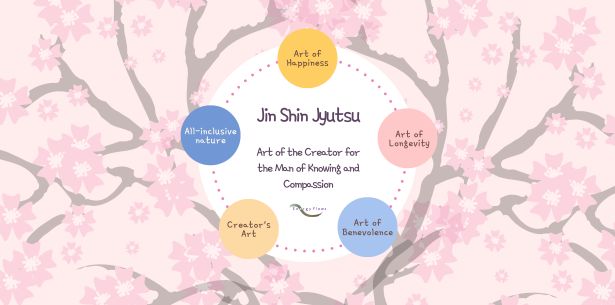
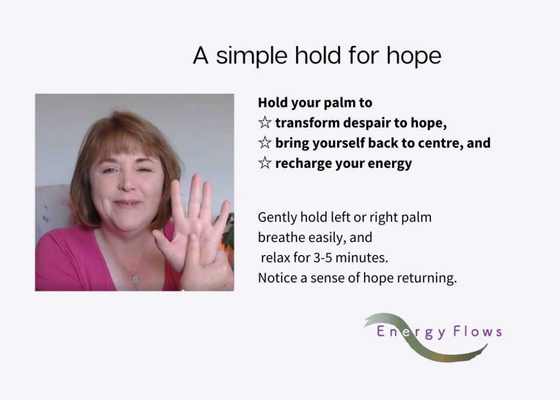
Today, try something new! Nurture and connect with hope through a simple JSJ hold (Jin Shin Jyutsu – gives hope). Simply holding the right place on your body can help transform sadness into hope. I love how a simple hold can reconnect us with a sense of hope. It works with the energetic patterns in your body and helps to ease tension so you can feel better right away.
And it’s so simple, just holding the centre of your palm. I’ve even heard it referred to as our own personal magic button. Welcome a bit of magic and hope in your life today.
Week 2: Peace
Peace is always with us – just sometimes hidden under the overwhelm and busy-ness. Peace is found in the spaces between our thoughts, in moments of stillness, and in the gentle acceptance of what is. It’s not the absence of difficulty but rather a quiet trust that we can meet life as it comes. This week, we create room for peace: in our mornings, in our breath, in the simple act of being present.
Peace isn’t only for thos with perfect lives or unlimited time. It’s not a luxury reserved for retirement or holidays. Welcome peace into your every day life now.
Today, listen deeply to yourself – the way you would listen to a dear friend. Not trying to fix anything, not analysing or judging. Just be present. Just hearing.
When we’re busy and distracted, we override our own wisdom with shoulds and obligations. But when you pause, connect, and truly listen to yourself with the same care and attention you’d give to someone you love, something within you shifts. You meet yourself with compassion. You begin to hear what’s true. You learn what you actually feel, what you actually need.
I invite you to put distractions aside. Notice what arises when you listen inward. Not planning, not analysing, just truly hearing yourself. This kind of presence toward yourself is profound. In listening to your own wisdom, in honouring what your feel and what you need, you can find peace.
Come home to yourself.
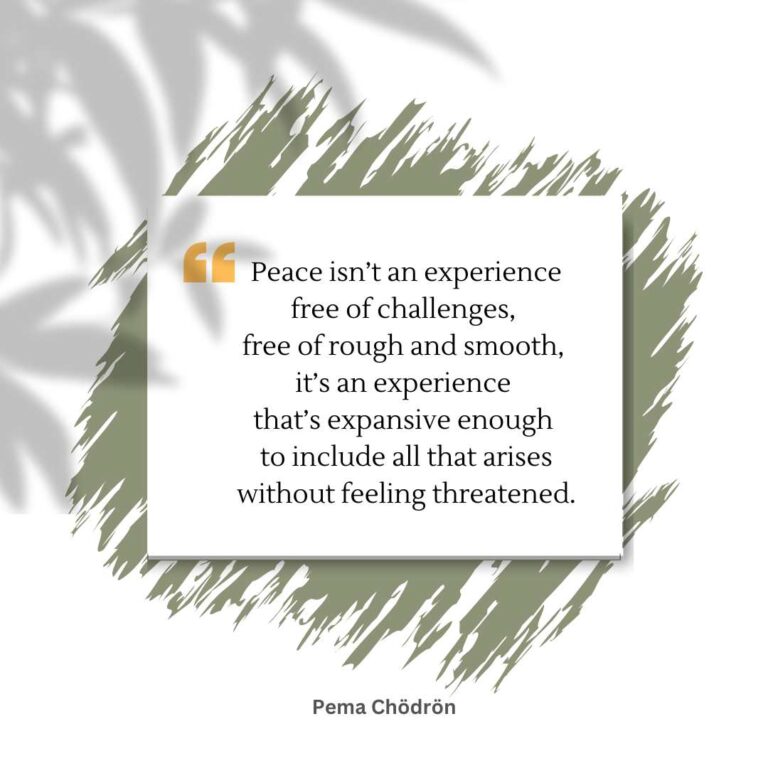
Can we find spiritual peace even in real life? Pema Chödrön suggests it is possible.
As I reflect on that, peace doesn’t mean everything is perfect. It means you can cope with it all, and still find peace. Peace can be large enough to contain contradictions, to welcome what comes without bracing against it.
Where can you find peace in your everyday life? Maybe spend time in nature on the way through your daily activities. Notice how expansive nature is. A storm and sunshine. Growth and decay. Life and death, all at once. Nature doesn’t resist what comes; it just keeps going, spacious enough to hold it all.
As you move through your day, notice where you’re tightening – where you’re bracing against what’s happening, trying to keep things small and controlled. And gently, without force, see if you can expand a little. Make room. Breathe into that space. This is how peace grows – not by eliminating what’s difficult, but by becoming large enough to hold it all.
Worry is a weight. It settled into our shoulders, our chest, our belly. We carry it like a burden we can’t put down. And as long as we’re carrying it, it’s challenging to experience peace. Peace flourishes in lightness. Peace expands with available emotional space. Peace comes when we set down what we’ve been gripping so tightly.
In Jin Shin Jyutsu, the 11s (where the neck meets the shoulder on each side) are the key to releasing old worries and burdens. This is where we hold the weight of what we think we should be, what we think we’ve failed at, the regrets we’ve been carrying. When we hold this area gentle, we’re giving our body the prompts and permission to let go.
Try this: hold your shoulder at SEL 11) and the front of your hip on the same side. Or, if that’s uncomfortable, simply hold your little finger. Breathe gently. Stay for a few minutes. As you do, notice what wants to release. The worry you’ve been gripping, the burden you’ve been carrying. Feel how your body softens as you give it permission to let go.
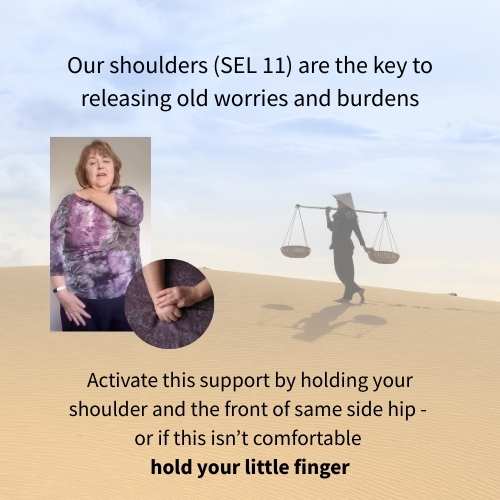
This is how peace arrives – not all at once, but through small releases. Through putting down one worry at a time. Through trusting that you don’t have to carry everything. As you release what’s been weighing you down, you create space for peace to move in. Lightness. Ease. Freedom.
You might imagine a small ritual that brings you comfort – lighting a candle, brewing tea, arranging flowers, or playing a song you love. Notice what you’re drawn to.
What does this ritual reveal about what brings you peace? Each ritual has different meanings for each person. For example, brewing tea can bring some people energy, be a contemplative exercise for others, or be a healing practice for those who work with herbal medicine. Tune into how this practice is resourcing you. You may find it different depending on the day and your current state.
When we bring gentle acts into the day, it tells your whole being that it’s safe to relax and accept more peace into your being.
Week 3: Joy
Joy is the spark, the lightness that comes when we pause to truly experience our lives. It lives in small moments: the warmth of your tea, the movement of your body, the simple act of being alive. Joy can show up even when everything isn’t perfect. It only asks that we notice and savour what’s already here. This week’s exploration brings joy into focus and provides simple prompts to bring that joy into your mind, body, spirit, and help to release blockages, increase self-awareness and future-proof your life and your being for more joy.
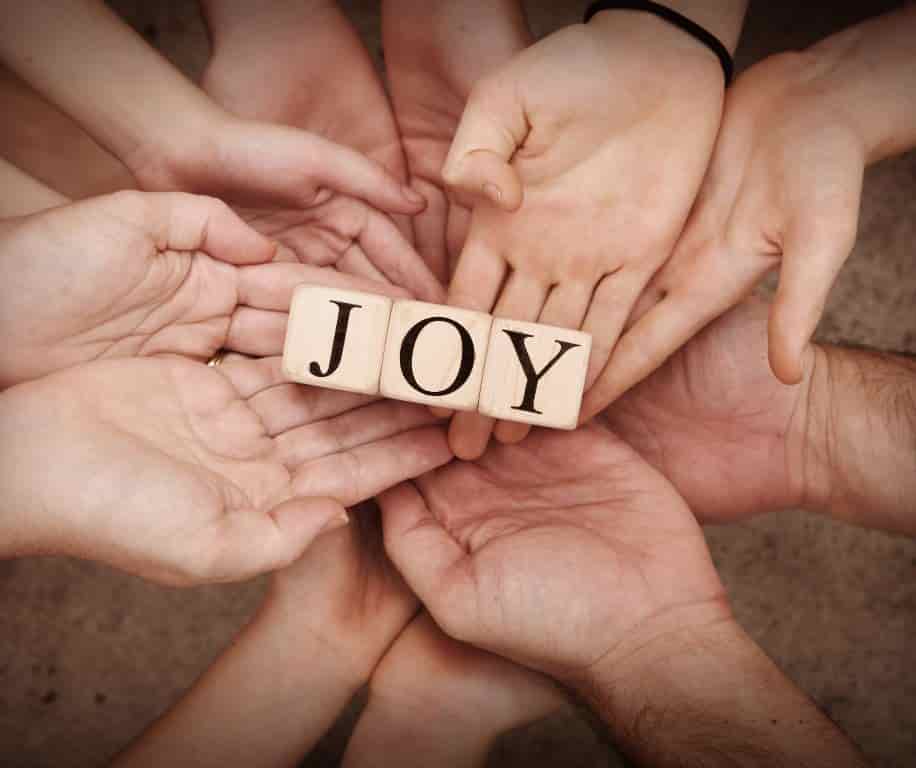
Joy is everywhere. It’s waiting in the small felt experience we rush past every day. But we only discover joy when we slow down enough to truly feel.
Choose one small thing today and experience is through your senses.
- Really taste your food – the textures, the flavours, the warmth.
- Feel the temperature of water on your skin.
- Notice the scent of something you love.
- Watch the way the light moves across a surface.
- Listen to subtle sounds around you.
When you actually pay attention, when you bring all of yourself to a simple moment, something shifts. The ordinary becomes extraordinary. A cup of tea becomes an experience. A breath becomes a gift.
This is where joy lives – not in grand gestures or perfect moments, but in the sensory richness of being alive. When we bring our full attention to what’s right in front of us, joy reveals itself. It’s been there all along. We just finally notice it.
What will you discover today through your senses?
Joy is wonderful and we can have more joy when we cultivate that state of mind. One way is to practice gratitude.
Joy often happens when we’re intentional and consciously choose to notice what is good in our lives. Consciously pausing and focusing on specific things that we’re grateful for. This isn’t just a one-off thing, but something we can build through that practice. It’s about looking for the light instead of dwelling in the shadows. Your intention brings you to experiencing joy instead of just wishing for it.
The alchemy of gratitude trains your mind toward joy. What we focus on grows. And by focusing this way it teaches your brain to notice what’s working instead of what’s broken. A bit like when you’re thinking about buying a red car – you’re more likely to see red cars everywhere.
Today, find one thing that brings you a smile. Something you’re genuinely grateful for. Hold it gently and closely in your mind. Feel how your thoughts shift, how your mood lifts. This is an anchor that you can return to whenever you need it. This is your joy starter – a thought that reminds you that joy isn’t something you have to look for externally. It’s something your mind an access anytime, anywhere, when you choose to.
Blessings and joy to you and the world today. 🕊️
Notice how your body moves when it’s filled with joy. There’s an openness to it. An expansion. Your shoulders drop away from your ears. Your chest opens. Your arms want to reach out, to embrace, to express. Your pace softens. There’s a lightness to your step. Joy has a signature in your body – and your body knows it.
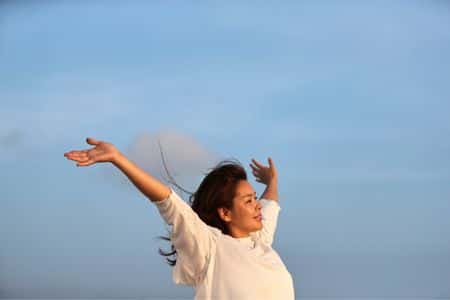
When we move intentionally toward joy, we’re not grasping for it or forcing it. We’re opening to it. We’re like someone reaching toward the sky – not grasping, but welcoming. Open. Receptive. Available. This openness is key. As Tara Brach explores in her talk on what keeps us from joy, often our struggle with joy comes form holding on too tightly, from fear, from the ways we close ourselves off to what’s possible.
Today move your body the way it moves when joy is present. Let your arms open. Let your chest expand. Feel the difference between movement that’s tight and defended, and movement that’s open and free. As you move, notice: what does openness feel like? What happens when you release the grip and simply allow?
This is how you build joy into your future – not by chasing it, but by becoming the kind of person whose body is open to it. Whose arms are ready to receive it. Whose heart is available. Move with this openness today, and notice how it shifts what’s possible.
Creativity is one of the most direct pathways to joy. When you create – whether it’s drawing, writing, cooking, building, or anything else – you’re expressing something that’s uniquely yours. You’re bringing something from the invisible world inside you into visible form. And in that expression, something shifts.
When we create, we’re not performing for anyone. (Of course, some people are creating things for their customers – that’s a bit different.) We’re not trying to get it right. We’re simply allowing something to move through us onto the page, into the kitchen, onto the canvas. And in that permission to express without judgment, there’s profound joy. It’s the joy of being alive, of having ideas and feelings and vision that want to come out. It’s the joy of discovering what you’re capable of. It’s the joy of play, of experimentation, of not knowing what will emerge.
Notice how it feels to express something from within you. Notice the aliveness in your hands, the focus in your mind, the opening in your heart. Notice how time expands when you’re creating – how you lose yourself in it because you’re finally fully yourself. This is where joy lives – not in the finished product, but in the creative act itself. In the permission. In the expression. In the being.
Spend a little time creating today. Let it be messy. Let it be imperfect. Let it be exactly what wants to come out.
Joy has a signal. For each of us, it’s different. And if you’ve been disconnected from joy for a while, learning to recognise your signal is how you find your way back.
I didn’t realise when I was experiencing joy until one day, driving home from a volunteering meeting, I noticed I was whistling. Just whistling without intending to. That simple signal sound became one of my signals. That moment I realised: this is one way joy shows up for me. This is how I know I’m connected to it again.
Your signal might be different. Maybe it’s a lightness in your step. A smile that shows up without effort. An urge to dance or sing. Laughter that feels easy and real. Energy that bubbles up. A softness in your shoulders. A warmth in your chest. Creativity that flows. Generosity that comes naturally. The impulse to reach out to someone you love.
Today, notice: what’s your joy signal? What small, simple thing happens when you’re truly experiencing joy? It might be something you do. Something you feel. Something you notice about how you move or speak or show up.
Pay attention to this signal. Write it down if it helps. Because once you know what joy feels like in your body, you can recognise it. You can follow it. You can trust it as a compass pointing you back toward what matters, toward what makes you feel alive.
What’s your signal?
What do you believe about joy? Do you belief you deserve it? That it’s safe to experience? That it’s meant for you?
Sometimes our past shapes our relationship with joy in ways we don’t even realise. Maybe someone told you that joy was frivolous, that there was always something more important to do. Maybe you learned when things felt good, something bad was waiting around the corner. Maybe it was said that taking time for yourself was selfish. Maybe grief or loss taught you that joy wasn’t safe, that happiness could be taken away.
These beliefs live quietly in us. They shape how we move toward joy or away from it. They determine whether we allow ourselves to feel it fully or whether we pull back, bracing for disappointment.
Today, notice your beliefs. When you feel joy arising, what happens? Do you lean into it or pull away? Do you feel you deserve it or do you feel guilty? Do you feel safe experiencing it or do you feel anxious? What stories did your past teach you about joy?
This awareness is the beginning of change. Because once you see the belief, you can question it. Be gentle with yourself.
Do the best you can until you know better. Then when you know better, do better.
Maya Angelou
You can ask whether your beliefs about joy are true? Are they still serving me? Do I want to keep believing this about myself and joy?
Your past has shaped you. But it doesn’t have to determine your future. What belief about joy are you ready to consider?
Today, I invite you to share your joy in whatever way feels right for you.
This might be telling someone about something that brought you lightness. It might be a genuine smile at a stranger. It might be sending a message to someone you care about and telling them what made you happy recently. It might be playing music that brings you joy and letting others hear it. It might be cooking something delicious and sharing it. It might be simply laughing more openly, letting your joy be visible.
There’s no right way to do this. The invitation is simply to let your joy be seen, in whatever form feels comfortable for you.
Notice what happens when you share. Does it feel easier than expected? Does it feel vulnerable? Does it shift something inside you? Sometimes in the simplest act of letting others witness our joy, something settles. We give ourselves permission to feel it more fully. We remind ourselves that joy is worth sharing, worth celebrating, worth making space for.
Joy grows when we share it – not because we’re losing it, but because in the sharing, it deepens. It becomes more real. More alive.
How will you share your joy today?
Week 4: Love
Love is the deepest combination of hope, peace, and joy. It begins with ourselves when we forgive, when we’re gentle, when we honour own needs.
It extends to others through presence, kindness, and authenticity. Love is both tender and strong, it sets boundaries while remaining open.
This final week, we practice love in all its forms: towards ourselves and the world around us.

If you’re new to this space, you might be wondering who Jackie is. If we’ve already met, you probably already know that I’m a warm, caring, and calm holistic therapist living in Ireland and working with people throughout the world online. This post really brings many of my core values into action – hope, peace, joy and love. I’m offering it freely to you my readers. If you’re moved to explore how we can transform things in your life even more, let’s chat.